Indian Musical Instruments
Abhijeet Kumar2026-01-14T13:36:09+05:30Flute
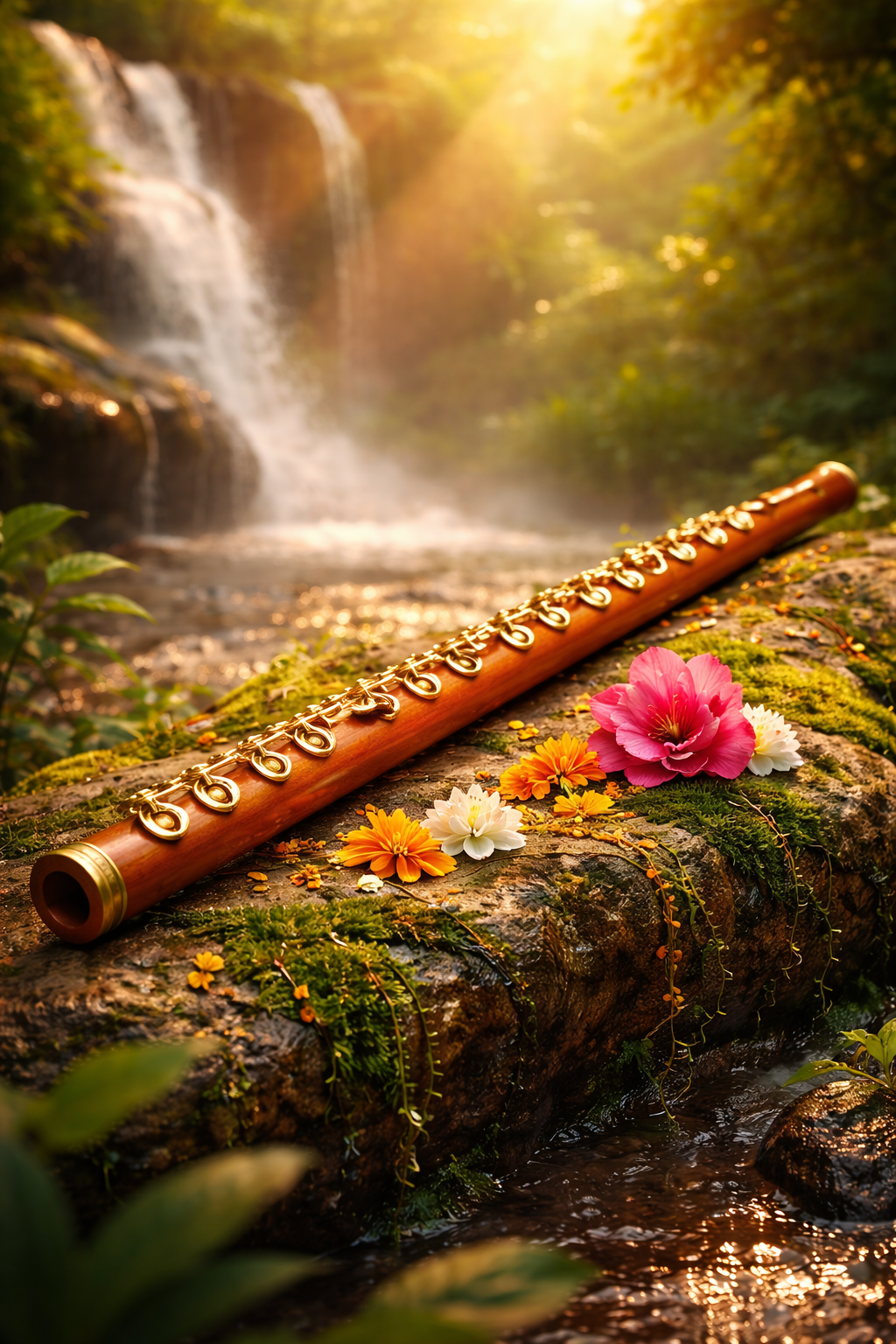
The flute is a transverse woodwind instrument held sideways, producing sound when air is blown across an embouchure hole. Typically made of silver, gold, or wood with a range of 3+ octaves (C4-C7), it's the highest-pitched instrument in orchestras.
History: One of humanity's oldest instruments—bone flutes date back 43,000 years (Germany/Slovenia). The modern concert flute was invented by Theobald Boehm (1847, Germany) with a key system for the chromatic scale.
Music Genres: Classical orchestras, Indian bansuri (Hindustani/Carnatic), Irish folk, jazz, pop, and Bollywood film scores.
How it Works:
- Air blown across the embouchure hole → edge splits the airstream → column of air inside vibrates
- Keys open/close 16+ holes for chromatic notes
- Head joint (mouthpiece), body, and foot joint construction
- Lip position/lip plate controls pitch/volume
- Vibrato from diaphragm or jaw motion
Types: Concert flute, piccolo, alto, bass, bansuri, Irish flute. No reed—pure breath control mastery! Perfect beginner-to-pro choice at Fsharp for Pune classical/fusion players.
Harmonium
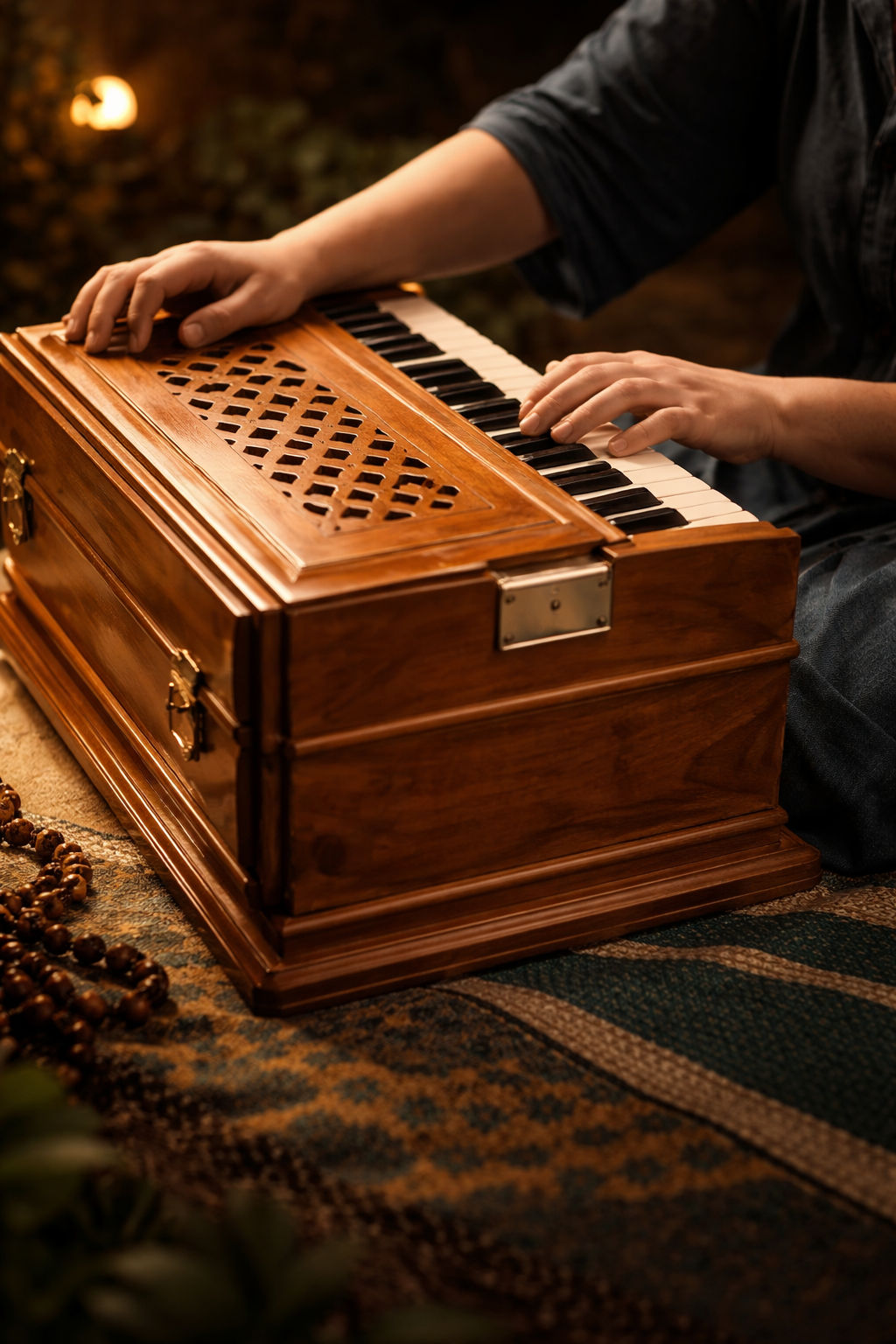
The harmonium is a portable keyboard reed organ widely used in Indian music. Featuring a hand-pumped bellows system and a 3-octave keyboard, it produces continuous sustained notes through metal reeds vibrating in airtight frames.
History: Originated in 1840s France (foot-pumped). Introduced to India via missionaries/traders (1860s). Indian harmonium perfected by Dwarkanath Ghose (Dwarkin & Sons, Kolkata, 1875)—converted to hand-pumped bellows for floor-sitting musicians, added drone stops for Indian ragas.
Music Genres: Hindustani classical, bhajans, kirtan, Sikh Gurbani, Bollywood, folk, qawwali. Essential accompaniment for vocalists.
How it Works:
- Left hand pumps bellows → wind pressure through reeds
- Right hand plays keys → specific reeds vibrate
- Drone knobs (Sa-Pa) create continuous tonic harmony
- Scale changer shifts the entire keyboard up/down an octave
- Coupler knob adds octave doubling
- 9-15 stops control tone volume
Parts: Keyboard, bellows, reed banks, air reservoir, stops. No electricity needed—iconic in Indian music tradition! Must-have at FSharp for Pune classical/devotional musicians.
Tabla
The tabla is a pair of hand-played drums central to Indian classical music. Comprising Dayan (right, smaller treble drum made of wood) and Duggi/Baya (left, larger bass drum made of copper/metal/clay), it's played with fingers, palms, and fingertips seated on the floor.
History: Evolved 18th century from the pakhavaj barrel drum, split into two. Popular legend credits Amir Khusru (Delhi, 1700s), but evidence traces to ancient puskara drums (Vedic texts, Bhaja Caves carvings ~200 BCE). Delhi Gharana (Sudhar Khan) established the classical style.
Music Genres: Hindustani classical, Kathak dance, bhajans, qawwali, fusion, Bollywood. Essential rhythmic backbone for vocal/instrumental accompaniment.
How it Works:
- Dayan: Wood tuned with ink paste → 5-7 tones (Na, Ta, Tun, etc.)
- Baya: Metal/clay → bass resonance (Ghe, Ke)
- Finger pressure + palm strokes create bols (syllables)
- Black tuning paste lowers the Dayan pitch
- Leather syahi (drumhead paste) creates tonal variation
- Played in talas (rhythmic cycles) like Teental (16 beats)
Gharanas: Delhi, Lucknow, Farrukhabad, Ajrada, Punjab. No sticks—pure hand technique mastery! Must-have for Fsharp, classical rhythm, students in une

Dholak
The dholak is a versatile, two-headed, barrel-shaped hand drum widely used across India, Pakistan, and Bangladesh. Typically 16-24 inches long, it features a larger bass head (left) covered with buffalo skin and a smaller treble head (right) with goat skin, tuned with wheat paste or metal rings.
History: Ancient origins in the Indian subcontinent (15th century+), evolved from folk barrel drums. No single inventor developed naturally in the North Indian/Punjabi traditions. Gained prominence in medieval folk music and Mughal courts.
Music Genres: Bhangra, qawwali, kirtan, bhajans, Bollywood, Hindustani classical, Garba, wedding baraats, folk devotional music. Essential for celebrations and rhythmic accompaniment.
How it Works:
- Bass head (Dha/Dhin): Palm strikes produce deep resonance
- Treble head (Na/Ta): Finger strikes create sharp rhythmic pops
- Wheat paste on treble lowers pitch, creates tonal variation
- Rope/strap tension system tuning
- Played horizontally across the lap
- Finger pressure + palm slaps create bols (rhythmic syllables)
Construction: Sheesham/mango wood body, leather skins laced with rope. Lightweight, portable—perfect for live performances and community events at Fsharp! Maharashtra's folk/classical percussion favorite.
Dholki
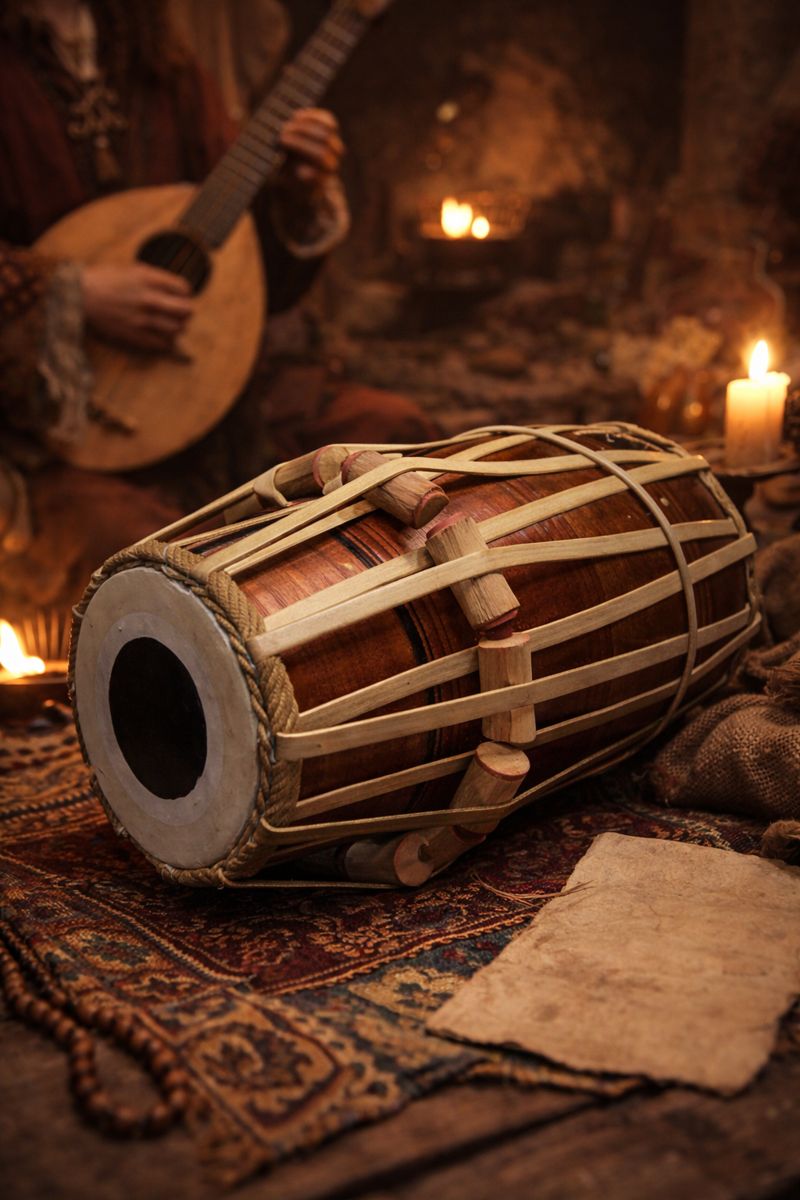
The dholki is a smaller version of the dholak, a versatile two-headed hand drum popular in North Indian folk music. About 12-16 inches long with a tapered wooden body, it features a larger bass head (left, buffalo skin) and smaller treble head (right, goat skin). Lightweight and portable, it's perfect for devotional music and family events.
History: Derived from the ancient North Indian pataha drum (medieval period). Evolved alongside the dholak in Punjab, Uttar Pradesh, and Haryana regions. No single inventor—folk instrument refined over centuries for bhajans and kirtans. Gained prominence during the Mughal era in folk traditions.
Music Genres: Bhajans, kirtan, qawwali, Bollywood, Garba, wedding music, Sufi devotional. Commonly accompanies harmonium and vocals in spiritual gatherings.
How it Works:
- Bass head: Open palm strikes (Dha, Dhin) for deep resonance
- Treble head: Finger taps (Na, Ta, Te) for crisp rhythm
- Rope lacing tension system for tuning
- Wheat paste on the treble head creates tonal variation
- Played horizontally across the lap with crossed hands
- Simpler than tabla—ideal for beginners
Perfect starter percussion for Fsharp customers wanting authentic Indian devotional sound in Pune!

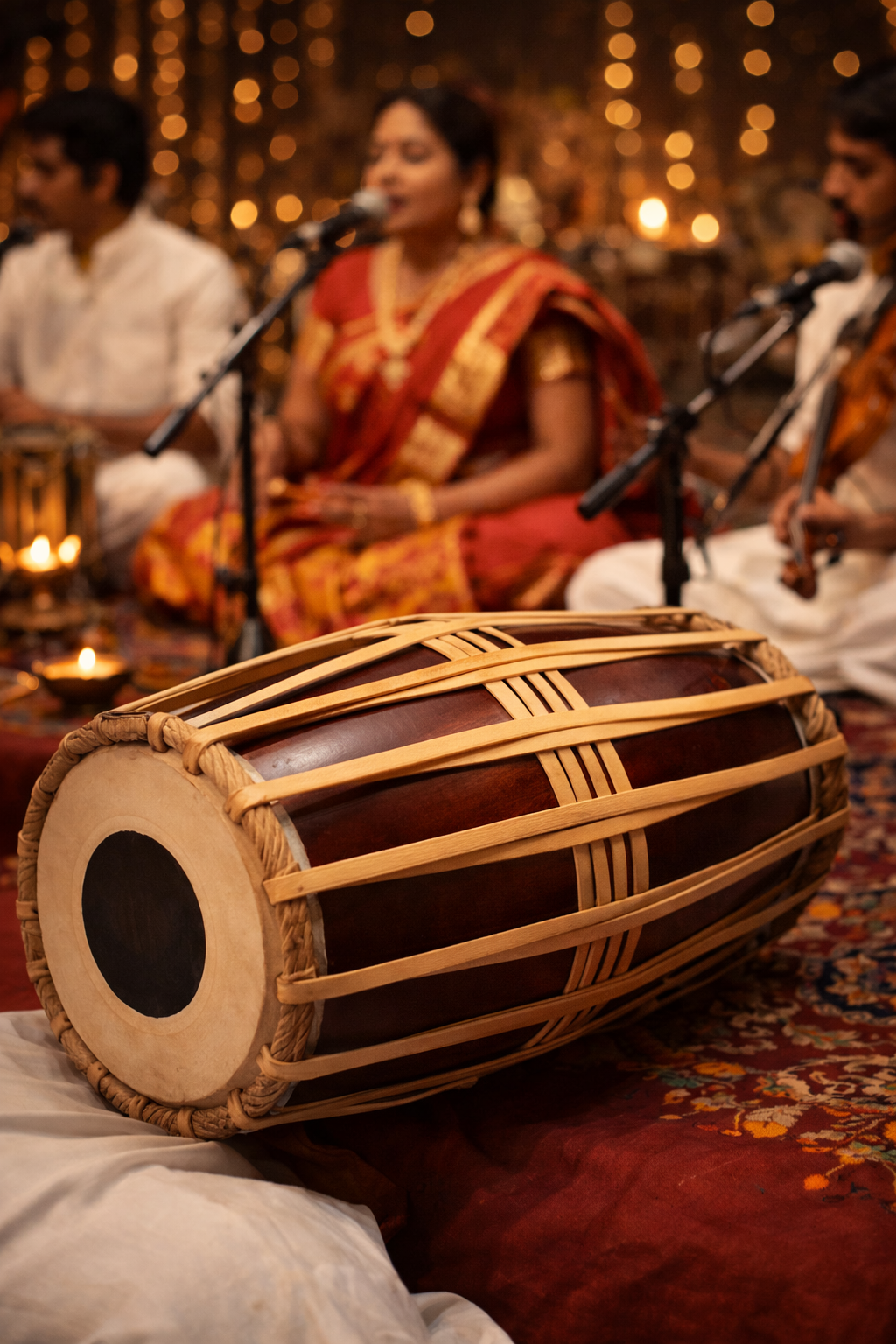
Mridangam
The mridangam is South India's premier two-headed barrel drum, the "king of percussion" in Carnatic classical music. Carved from a single jackfruit wood block (22-24 inches), it features a circular treble head (valanthalai) and a larger bass head (thoppi), both goat skin with black tuning paste (saru).
History: Ancient origins—over 2000 years old, mentioned in the Natya Shastra (200 BCE). Originally, clay ("mrid" = clay, "angam" = body) evolved to wood. Mythologically, Lord Shiva's bull Nandi played it during the cosmic dance. Predates tabla (split mridangam legend).
Music Genres: Carnatic classical concerts, Bharatanatyam dance, devotional music, temple rituals. Essential rhythmic foundation.
How it Works:
- Treble head: Finger strikes → 7 sollu-kattu syllables (tha, dhhi, thu, etc.)
- Bass head: Palm bass (dhum, dhak)
- Black rice paste + iron oxide lowers treble pitch
- Deer skin ring tension system
- Played horizontally across the right calf
- Complex korvais (rhythmic compositions) in talas (Adi, Rupaka)
No nails—pure palm/finger mastery! Fsharp is a must-have for serious Carnatic percussionists in Pune.
Kanjira
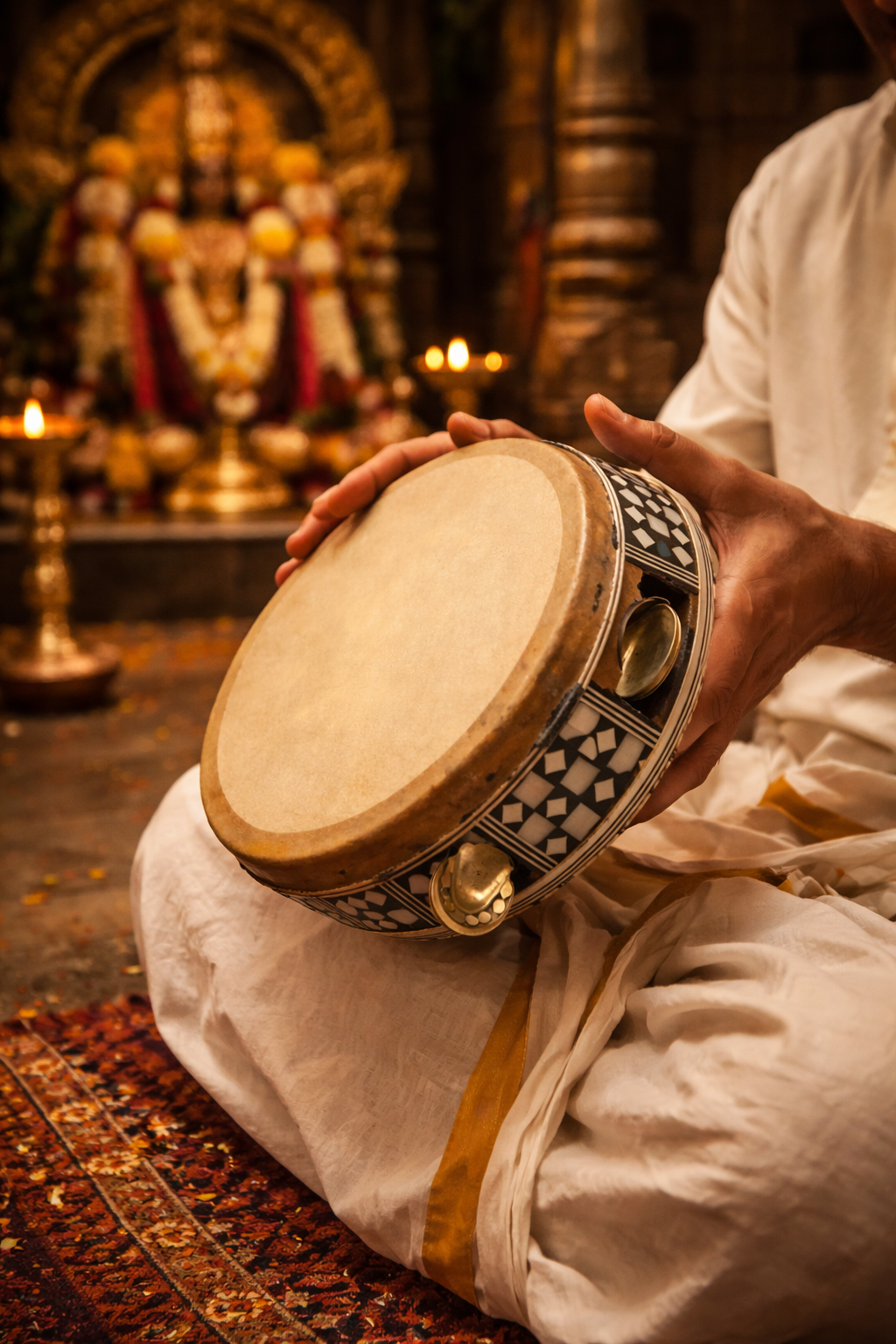
The kanjira is a small South Indian frame drum from the tambourine family, featuring a single goat/iguana skin head stretched over a 6-8 inch wooden frame with one pair of metal jingles (zils). Lightweight and held in one hand, it's played with intricate finger techniques.
History: Ancient origins in Dravidian temple rituals (1000+ years). Modern classical form credited to Manpoondia Pillai (1880s), who refined it from a folk frame drum to a Carnatic accompaniment instrument using lizard skin and a single jingle pair.
Music Genres: Carnatic classical (South Indian), bhajans, temple music, fusion. Supports mridangam as "upapaka vadyam" (secondary percussion).
How it Works:
- Frame held in left hand, struck with right fingers/palm
- Jingles create shimmering rattle, contrasting skin tones
- Lizard skin preferred for crisp articulation
- Finger rolls, slaps, and taps produce 5-7 distinct syllables
- No tuning—pitch from skin tension and stroke position
- Played seated cross-legged with mridangam/ghatam
Masters: Sunaad Anoor, Sundar Kumar. Demanding technique elevates it to classical status. Perfect starter percussion for Fsharp Carnatic students in Pune!